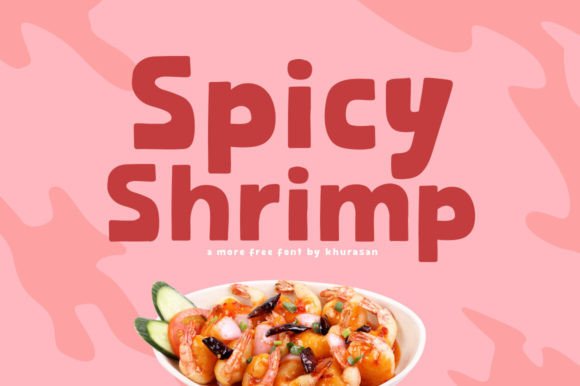
Spicy Shrimp: A Playful Font for Bold Designs
In the crowded landscape of digital design, finding a typeface that balances personality with legibility is often the difference between a project that gets scrolled past and one that stops the viewer in their tracks. Spicy Shrimp emerges as a compelling solution for creators seeking a modern, handwritten aesthetic without sacrificing professional polish. This display font captures the organic imperfection of human handwriting while maintaining the structural integrity needed for commercial applications. Whether you are a seasoned graphic designer, a small business owner crafting your brand identity, or an educator looking to make learning materials more engaging, this typeface offers a versatile toolkit for visual communication.
The appeal of Spicy Shrimp lies in its ability to inject warmth into sterile layouts. Unlike rigid geometric sans-serifs or overly ornate scripts that can be difficult to read at smaller sizes, this font strikes a careful balance. It features fluid strokes and varying line weights that mimic the natural pressure changes of a marker or brush pen. This characteristic makes it particularly effective for headlines, logos, and short bursts of text where emotional connection is paramount. When viewers encounter text that feels hand-crafted, they subconsciously attribute a sense of authenticity and approachability to the message, a psychological nuance that can significantly boost engagement rates in marketing campaigns.
Defining Characteristics and Visual Strengths
At its core, Spicy Shrimp is defined by its playful yet controlled energy. The letterforms possess a slight bounce and irregularity that prevents the text from looking mechanically generated. This "cute" quality does not mean it lacks sophistication; rather, it suggests a friendly, informal tone that invites interaction. The font's open counters and clear distinct shapes ensure that even at a glance, the message remains decipherable. This is a critical feature for display fonts, which often fail when users cannot quickly parse the information.
One of the standout strengths of this typeface is its adaptability across different mediums. While many handwritten fonts struggle when scaled up for large-format printing, Spicy Shrimp retains its charm on massive banners and storefront signage. Conversely, it holds up well in digital environments, rendering crisply on high-resolution screens and mobile devices. The ink-trap nuances and terminal variations add texture to flat designs, providing depth without the need for excessive drop shadows or gradients. For designers working within minimalist frameworks, this font serves as a primary visual element that carries the weight of the design entirely on its own merit.
Practical Applications Across Industries
The versatility of Spicy Shrimp allows it to transcend specific niches, making it a valuable asset for a wide array of projects. In the realm of branding and logo design, it is ideal for businesses that want to appear accessible and human-centric. Think of local coffee shops, artisanal bakeries, pet care services, or creative agencies that wish to distance themselves from corporate stiffness. A logo set in Spicy Shrimp immediately signals to the customer that there are real people behind the brand who care about the details.
For marketers and content creators, the font shines in social media graphics and promotional posters. In an era where attention spans are fleeting, visuals must communicate mood instantly. Using this font for Instagram stories, YouTube thumbnails, or Pinterest pins can increase click-through rates by making the content feel less like an advertisement and more like a personal recommendation. It works exceptionally well for seasonal campaigns, event invitations, and limited-time offers where a sense of urgency mixed with fun is required.
Educators and publishers also find significant value in this typeface. Textbooks and worksheets often suffer from a lack of visual interest, which can disengage younger learners. Incorporating Spicy Shrimp into chapter headers, activity sheets, or educational apps can make the material feel less intimidating and more inviting. Similarly, authors self-publishing books can utilize this font for cover designs, particularly in genres like cozy mysteries, lifestyle guides, or children's literature, where the typography needs to reflect the gentle or whimsical nature of the story.
Enhancing User Experience and Brand Perception
Beyond mere aesthetics, the strategic use of Spicy Shrimp influences how users perceive and interact with content. In user interface (UI) design, specifically for onboarding screens or call-to-action buttons, a friendly typeface can reduce friction. It lowers the cognitive load associated with processing formal information, making the user feel more relaxed and willing to explore. This subtle shift in tone can lead to higher conversion rates and improved customer satisfaction scores.
From a branding perspective, consistency is key. Once a business adopts Spicy Shrimp as part of its visual identity, it should be applied consistently across all touchpoints—from packaging and business cards to website headers and email newsletters. This repetition builds recognition. Over time, customers begin to associate the specific look of the font with the values of the company: creativity, friendliness, and modernity. It becomes a non-verbal ambassador for the brand, communicating these traits before a single word of copy is read.
Considerations for Implementation
While Spicy Shrimp is a powerful tool, it is not a one-size-fits-all solution. Effective design requires knowing when to use it and when to pair it with more neutral typefaces. Because it is a display font, it is best reserved for headings, titles, and short phrases. Using it for long body paragraphs can lead to eye fatigue and reduced readability. A best practice is to pair it with a clean, simple sans-serif or a classic serif for body text. This contrast creates a hierarchical structure that guides the reader's eye naturally through the content.
Licensing is another practical consideration. When downloading and implementing Spicy Shrimp for commercial projects, ensure you have the appropriate license that covers your intended use, whether it be for print, web, or merchandise. Respecting intellectual property rights protects both the creator of the font and the designer using it. Additionally, test the font in various lighting conditions and background colors. While it performs well on white backgrounds, ensure there is sufficient contrast when placing it over images or colored fields to maintain accessibility standards for visually impaired users.
Ultimately, adding Spicy Shrimp to your creative arsenal is about expanding your ability to tell stories visually. It offers a bridge between the digital precision of modern design tools and the organic warmth of human expression. By leveraging its unique characteristics thoughtfully, professionals across industries can create designs that not only stand out in a saturated market but also resonate deeply with their intended audience. The result is work that feels alive, relevant, and distinctly memorable.